
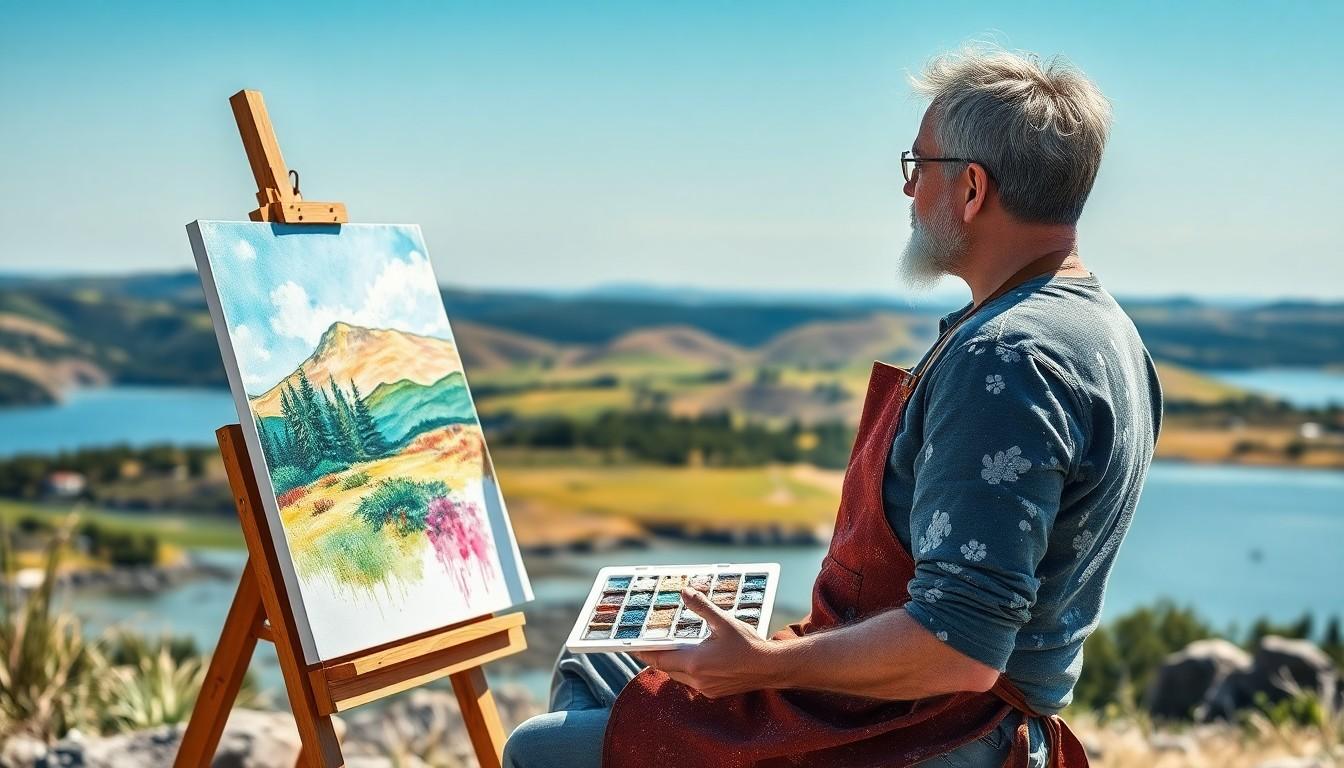
Imagine standing before a breathtaking landscape, the colors dancing in your mind, just waiting to burst onto the canvas. Watercolor painting isn’t just a hobby; it’s a magical journey where every brushstroke whispers secrets of nature’s beauty. Whether it’s rolling hills or serene lakes, capturing these scenes in vibrant watercolor can transform any artist into a veritable Picasso of the outdoors.
Understanding Watercolor Painting Landscape
Watercolor painting landscapes presents an exciting opportunity for artists to explore nature’s beauty. This medium enhances the portrayal of light and color.
History of Watercolor Painting
Watercolor painting dates back to ancient civilizations, with evidence in Egyptian murals and Chinese paintings. The 18th century saw its rise as a distinct art form in Europe. Notable artists like J.M.W. Turner and John Constable played pivotal roles, elevating watercolor to an esteemed medium. Established societies, such as the Royal Watercolour Society in 1804, promoted watercolor’s legitimacy, further solidifying its influence in art history.
Evolution of Landscape Painting in Watercolor
Landscape painting in watercolor evolved significantly over centuries. The early stages featured detailed depictions of natural scenes, often emphasizing realism. Romanticism infused emotion and imagination into landscapes, while the Impressionist movement introduced vibrant colors and loose brushwork. Contemporary artists embrace mixed techniques, integrating multimedia elements for dynamic outputs. This evolution continues, with watercolor remaining a versatile choice for capturing ever-changing landscapes.
Techniques for Watercolor Landscape Painting
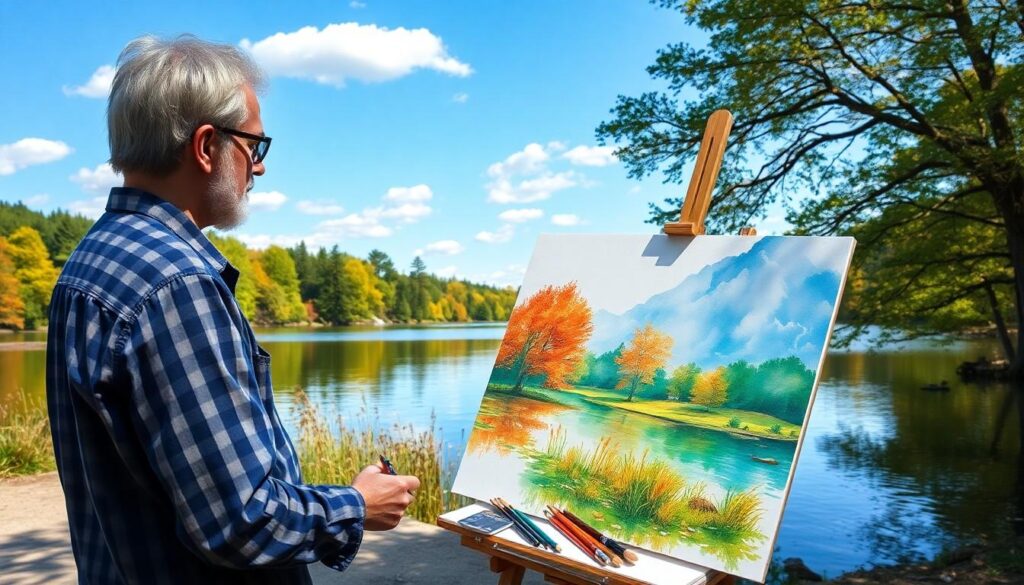
Watercolor landscape painting employs various techniques that enhance the quality of artworks. Mastering these techniques leads to more captivating landscapes.
Brushwork Techniques
Utilizing varied brushwork significantly impacts the artwork. Flat brushes create smooth washes for skies, while round brushes add detailed textures for trees. A fan brush offers unique stippling effects resembling foliage. Moreover, dry brushing techniques yield a crisp, textured appearance, perfect for rocky surfaces. Softening edges with a wet-on-wet approach generates ethereal clouds, enhancing atmospheric depth. By applying these methods, artists express diverse landscape elements effectively.
Color Mixing Tips
Color mixing plays a pivotal role in achieving vibrant landscapes. Opting for a limited palette often results in more cohesive hues. Mixing complementary colors creates shades that add depth; for instance, blending orange and blue generates muted tones ideal for shadows. Additionally, layering washes allows colors to shine through; translucent overlays enrich the final composition. Using a color wheel aids artists in understanding relationships between colors and facilitates harmonious blending. Embracing these tips elevates an artist’s ability to convey nature’s beauty.
Choosing the Right Materials
Selecting quality materials significantly impacts watercolor landscape painting. The right choices enhance creativity and ensure artwork longevity.
Watercolor Paints
Watercolor paints come in two main types: tubes and pans. Tubes offer vibrant pigments, ideal for mixing and large washes. Pans provide convenience and portability, suitable for plein air painting. Both types deliver excellent results but vary in application techniques. Artists often prefer professional-grade paints for their higher pigment concentration, resulting in richer colors. Brands like Winsor & Newton and Daniel Smith are widely respected for their quality. When starting, a limited palette of primary colors aids in mastering color mixing, leading to a deeper understanding of the medium.
Paper Types for Landscapes
Choosing the right paper is crucial for watercolor landscapes. Cold-pressed paper features a textured surface, perfect for holding water and pigment, while hot-pressed paper offers a smooth finish, ideal for detailed work. Watercolor paper generally has weights ranging from 190 gsm to 800 gsm, with heavier options preventing buckling. Artists lean toward 300 gsm paper for its durability during multiple washes. Brands like Arches and Fabriano produce high-quality papers well-suited for landscapes. Each type allows for unique techniques, enabling artists to achieve various effects in their paintings.
Step-by-Step Guide to Creating a Watercolor Landscape
Creating a watercolor landscape involves a series of intentional steps to ensure a captivating and harmonious final piece.
Sketching the Landscape
Begin by gently sketching the landscape. This initial outline serves as a roadmap for the artwork. Use a light touch, allowing for easy adjustments. Focus on key elements such as hills, trees, and water bodies. Incorporating perspective adds depth to the piece. Artists often employ simple shapes to represent complex forms, fostering clarity. Keep the composition balanced, guiding the viewer’s eye naturally across the painting. A well-thought-out sketch establishes a firm foundation for painting.
Applying Watercolor Layers
Start layering colors to add depth and dimension. Use a large brush for broad washes, maintaining a wet palette for smooth blending. Begin with light colors, gradually building up to darker shades. Layering transparent washes creates an illusion of depth, with each layer revealing richness. Allow each wash to dry before adding the next to prevent muddiness. Focus on color harmony, ensuring that each hue complements the others. Adding details with a smaller brush enhances textures and emphasizes focal points, such as trees or rocks.
Common Challenges and How to Overcome Them
Artists often encounter specific challenges while creating watercolor landscapes. Addressing these challenges enhances the overall painting experience and results.
Dealing with Color Bleeding
Color bleeding poses a common issue in watercolor painting. Controlling it requires understanding the properties of water and pigment. Using less water helps prevent excessive diffusion of colors. Applying a frisket to preserve certain areas can keep lines crisp without unwanted blending. Experimenting with various brushes allows for more precise application of pigments. Artists should practice layering to create more defined edges while maintaining vibrant color transitions.
Managing Water Control
Water control significantly influences the outcome of watercolor landscapes. Too much water can lead to oversaturated areas, resulting in muddiness. Artists should practice using varying water amounts on their brushes. Starting with damp brushes instead of wet ones allows for better control. Adjusting water levels during the painting process also contributes to texture variation. Maintaining a clean workspace aids in ensuring clarity and focus on the artwork.
Watercolor painting landscapes offers artists a unique way to express their creativity while capturing the essence of nature. With its rich history and evolving techniques artists can explore endless possibilities. Mastering various methods and selecting quality materials enhances the overall painting experience and results.
As artists delve into this enchanting medium they’ll discover the joy of layering colors and experimenting with textures. The challenges encountered along the way only serve to deepen their understanding and appreciation of watercolor. Ultimately the journey of creating stunning landscapes is not just about the final piece but the growth and joy experienced throughout the process.